Icebreakers that don't make people cringe
By Arhum Waheed · Published · Updated
Say "icebreaker" to a room of adults and watch their shoulders go up. Most people have a memory of being asked to share an embarrassing fact with strangers at 9 a.m. Good icebreakers aren't like that. They're short, they let people choose how much to share, and they're over before anyone has time to dread them.
A random picker helps in two ways. It decides who goes next, so nobody has to volunteer. And it can pick the question, so the facilitator isn't seen to be targeting anyone. Here are eight that work, with an honest "ask" rating for each: how much they ask of people.
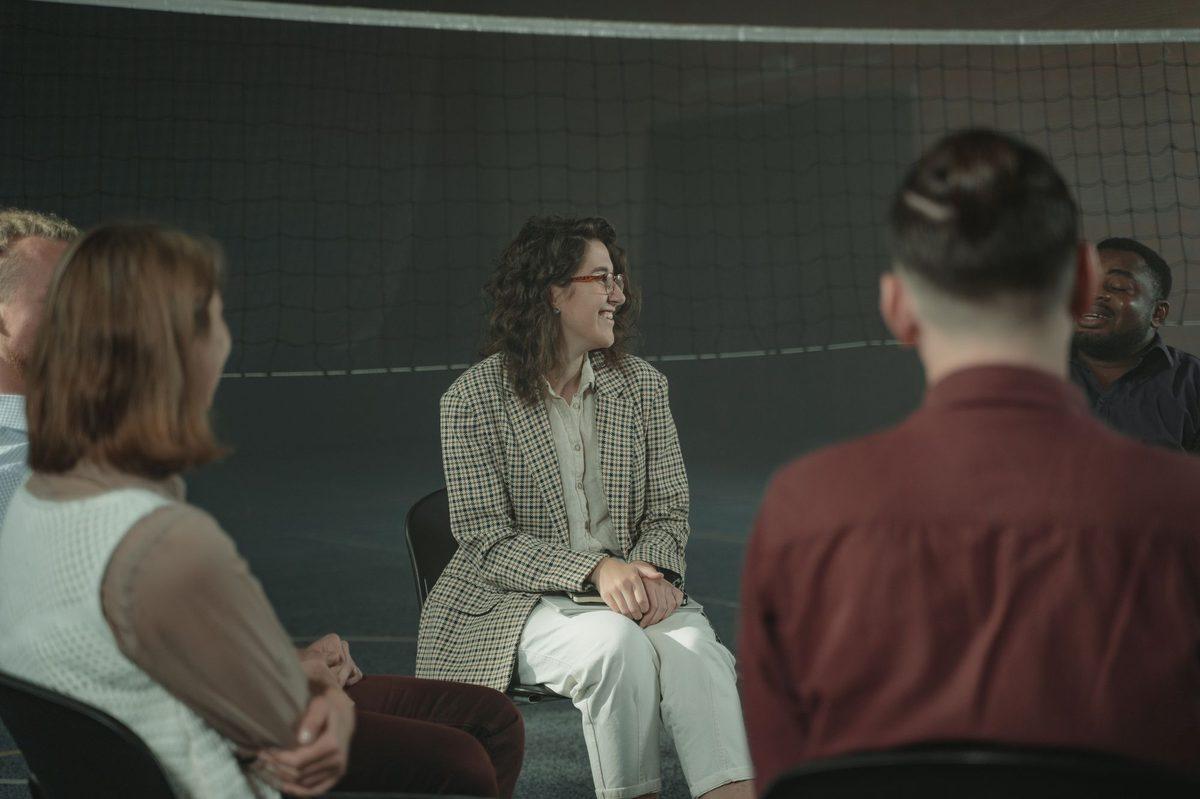 Photo: Pexels (Pexels License).
Two wheels, two jobs
Most of these use one or both of these setups:
- A people wheel. The random name picker with everyone's name, one per line. Remove winner is on by default, so each person comes off once they've had a turn. There's also a Party / icebreakers example you can load and edit.
- A question wheel. The spinner wheel on the homepage, with your questions typed one per line. Keep each question short enough to read on a slice, and turn on Remove winner after spin if you don't want repeats.
Both keep the list in your browser, so you can set them up the night before on the laptop you'll use.
The games
1. Spin the question (ask: low)
Group: 4–30. Time: 1 minute per person.
Spin the people wheel to pick a person, then the question wheel to pick their question. They answer in a sentence or two. Then they press SPIN for the next person, which is a small thing that makes it feel less like an interview.
Allow one "pass and spin again" per person. Nobody uses it much, but knowing it's there makes everyone relax.
2. This or that (ask: very low)
Group: Any size. Time: 5 minutes.
The question wheel holds pairs: "Coffee or tea?", "Beach or mountains?", "Early bird or night owl?", "Call or text?" Spin, read it out, and everyone moves to one side of the room or answers in the chat. Nobody talks alone. It's the best opener for a large group or a nervous one.
3. One word (ask: low)
Group: 5–20. Time: 3 minutes.
Spin a prompt like "Describe your weekend in one word" or "One word for how this week's going." Then go around in random order. One word each. It's fast, and it gives the facilitator a quick read on the room's mood.
4. Two truths and a lie (ask: medium)
Group: 5–15. Time: 2 minutes per person.
The classic. The picker decides who goes next, so nobody waits to see if they'll be asked. Give people a minute to think before the first spin. I'd keep this one for groups that already know each other a little; with total strangers, it's hard to guess.
5. Show us something (ask: medium, great on video calls)
Group: 4–12. Time: 1 minute per person.
Spin a person. They grab one thing within reach and say why it's there. Mugs, plants and pets dominate. It works especially well on video, where it gives people something to look at besides faces.
6. Common ground (ask: low)
Group: 6–30. Time: 8 minutes.
Split people into groups of three or four (a random team generator does it in one step). Each group has three minutes to find two things all of them have in common that aren't obvious. "We all have a sister" counts. "We all work here" doesn't. Then spin the groups to decide who reports back first.
7. Would you rather (ask: low)
Group: Any. Time: 5–10 minutes.
Like "this or that," but sillier. "Would you rather have a rewind button or a pause button for your life?" The question wheel picks the prompt; a quick show of hands answers it; then spin a person to explain their choice.
8. Letter categories (ask: low, good for classes and parties)
Group: 4–20. Time: 5 minutes.
Load Letters A–Z or Word game letters on the spinner wheel. Spin a letter, then a category: "a food," "a city," "a band." First person to answer gets a point. It's barely an icebreaker, which is why people like it.
 Photo: Matheus Bertelli on Pexels (Pexels License).
A bank of 30 low-pressure questions
Copy these straight into the question wheel. None of them require anyone to share anything personal they wouldn't say to a colleague.
- What's the best thing you ate this week?
- What's a skill you'd like to learn?
- What's on your desk right now that shouldn't be?
- Best concert or show you've been to?
- What did you want to be when you were ten?
- What's a small thing that always improves your day?
- Which app do you open first in the morning?
- Favorite season, and why?
- What's the last thing you bought that you love?
- Book, show or podcast you'd recommend?
- Where would you go for a free long weekend?
- What's your go-to snack?
- What's a word or phrase you overuse?
- Best piece of advice you've been given?
- Are you a planner or a wing-it person?
- What's a hobby you've picked up and dropped?
- What's your favorite sound?
- What's the most useful thing in your kitchen?
- If you had a theme song, what would it be?
- What's a movie you can watch again and again?
- Pick a superpower for your commute.
- Best board or card game?
- What's a local place everyone should try?
- Tea, coffee, or neither?
- What's something you're looking forward to this month?
- What's a talent nobody here knows you have?
- Favorite way to spend a rainy day?
- What was your first job?
- What's something you changed your mind about recently?
- If you could master one instrument overnight, which one?
The wheel holds up to 60 entries, so all 30 fit with room for your own.
A worked example: a 10-minute opener for a 16-person workshop
- Minutes 0–3: This or that (game 2), four rounds. Everyone moves, nobody talks alone.
- Minutes 3–9: Spin the question (game 1) for six people chosen by the people wheel. Remove winner stays on, so those six come off. For the afternoon breakouts, paste all sixteen names into the random team generator, set Number of teams to 4, and paste the groups into the chat so each table already knows who they're with.
- Minute 9–10: One word (game 3) round for the whole room in random order.
Ten minutes, every person spoke at least once, and only six had to talk for more than a few seconds.
What separates a good icebreaker from a bad one
Let people choose their depth. "What's something you're looking forward to?" lets one person say "the weekend" and another talk about a new baby. Both are fine.
Avoid questions about family, health, money or appearance. You don't know who's going through what.
Keep it short. If the icebreaker is longer than ten minutes, it's not an icebreaker anymore; it's the agenda.
Go first yourself if you're facilitating, or at least be on the wheel. It's only fair.
Frequently asked questions
How do I randomly pick who goes next in an icebreaker?
Paste everyone's name into the random name picker and spin. Remove winner is on by default, so each person leaves the wheel after their turn and nobody gets picked twice before everyone's had a go.
Can I spin icebreaker questions instead of names?
Yes. Type your questions one per line into the spinner wheel. Switch on remove winner after spin if you don't want a question to come up twice.
What's a good icebreaker for a large group?
"This or that" works for any size, because people answer by moving or by typing in a chat, not by speaking alone.
How can I share my icebreaker wheel with a co-host?
Press Copy share link and send it to them. The link opens the same wheel with the same questions or names. Anyone with the link can see the list.
Are these icebreakers OK for students?
Most are. Games 2, 3 and 8 work well in classrooms. For more on calling on students fairly, see fair ways to call on students.